


How to do a good job of non-standard equipment design?
2020.11.30Non-standard equipment refers to the special non-standard equipment which is not produced in large quantities by the state and which is really needed by all sectors of the national economy. Non-standard equipment is not designed and manufactured in accordance with the unified industry standards and norms promulgated by the state, but designed and manufactured according to their own needs. In the increasingly fierce market competition environment, industrial enterprises have carried out systematic technological innovation, replaced traditional equipment with computer-controlled automation equipment, and replaced pure manual operation with mechanical equipment operation. Demand for non-standard automation equipment has also increased. How to do the design of non-standard automation equipment well has become a common concern of relevant units and personnel.
I. Design flow of non-standard automation equipment
(1) Determine development projects and understand customer requirements, including product quality requirements, equipment production efficiency requirements and equipment working environment.
(2) Analyze the products, understand the production process, understand the product dimension requirements and incoming materials, and communicate with customers about the matters needing attention in the production process and the technical parameters of the equipment use place.
(3) Draw up a plan. The engineer will discuss and analyze the equipment plan, which includes the schematic diagram of the equipment, brief introduction of each part of the mechanism, operation description and technical parameters of the equipment.
(4) Program review. An audit group composed of engineers will review the scheme, including feasibility assessment of equipment, cost assessment of equipment, assessment of equipment production efficiency, and feasibility assessment of each part of the structure.
(5) Plan rectification. Rectify the problems discussed in the scheme audit.
(6) The customer determines the design scheme. The design scheme is handed over to the customer, and the customer finally determines the scheme according to the demand.
(7) Design and development. The engineering department shall arrange the engineers to design the mechanism, make the assembly drawing and part drawing of the machine, select the execution components and electronic control parts, and make the list of machining parts, the requisitions for standard parts and the action manual.

How to design non-standard automation equipment well?
(1) The production of non-standard equipment is carried out in small batches of a single piece, which has relevant experience and technical requirements for relevant designers. Non-standard equipment design mainly adopts standard system and non-standard equipment standard system in China, follow the "original membrane stress or the maximum direct stress shall not exceed the allowed stress" principle, and non-standard equipment design main consideration of stress concentration on the safety coefficient and its type, the complexity of the stress evaluation method, the material inhomogeneity, geometric factors, the influence of factors such as weld defects.
(2) in the design of non-standard equipment, first of all, on the choice of standard parts, as far as possible the finished products, in order to effectively reduce the non-standard products in raw material consumption, cost management cost, yield, etc., after the use of the finished products can also make the equipment listed has better reliability, prolong the equipment design and manufacturing cycle, improve design efficiency. Secondly, in the design of non-standard equipment, on the basis of meeting the process design conditions, we should carefully study the technical scheme of the equipment, and determine the advanced, reasonable and stable non-standard equipment. Finally, in the design of non-standard equipment, we should adhere to the humanized design concept, repeatedly measure whether the use of equipment conforms to workers' use habits, and pay more attention to details.
(3) In the design of non-standard equipment, in addition to considering whether the design can meet the needs of customers and production, it must also consider whether the structure of non-standard equipment is reasonable, safe and stable, easy to manufacture, install and maintain. Designers must strictly implement relevant standards and specifications, fully understand the technical requirements, physical parameters and functions of non-standard Settings, and compare and choose various schemes to determine the best scheme. On the other hand, designers should pay attention to the rationality of the design of non-standard equipment parts. In the design, to check whether the parts meet the stiffness, strength and other requirements, and reasonable choice of parts of the material, matching type and processing method.
(4) The standardization of design work is the institutional premise to promote the smooth development of design work and facilitate the introduction and absorption of foreign advanced technology. The quality of design work is directly related to the level and quality of non-standard equipment. Standardized design work requires strict design procedures, systematic demonstration of technical schemes, designs and construction drawings, and examination of process performance and standardization. In the process of standardization of drawings and design documents, it is necessary to check whether they conform to the relevant national regulations. Carefully review the terms, terms, symbols, formats, formats, names, codes, etc., and implement the relevant standards and specifications of the design document.
Common skills of assembling and debugging non-standard automatic equipment.
The basic debugging technique for any machine, including non-standard automation equipment, is "Horizontal, Vertical, and Concentric". First of all, regardless of the debugging of any product, we must understand its features, and the customer's technical requirements. The following small series for you to introduce some common debugging techniques.
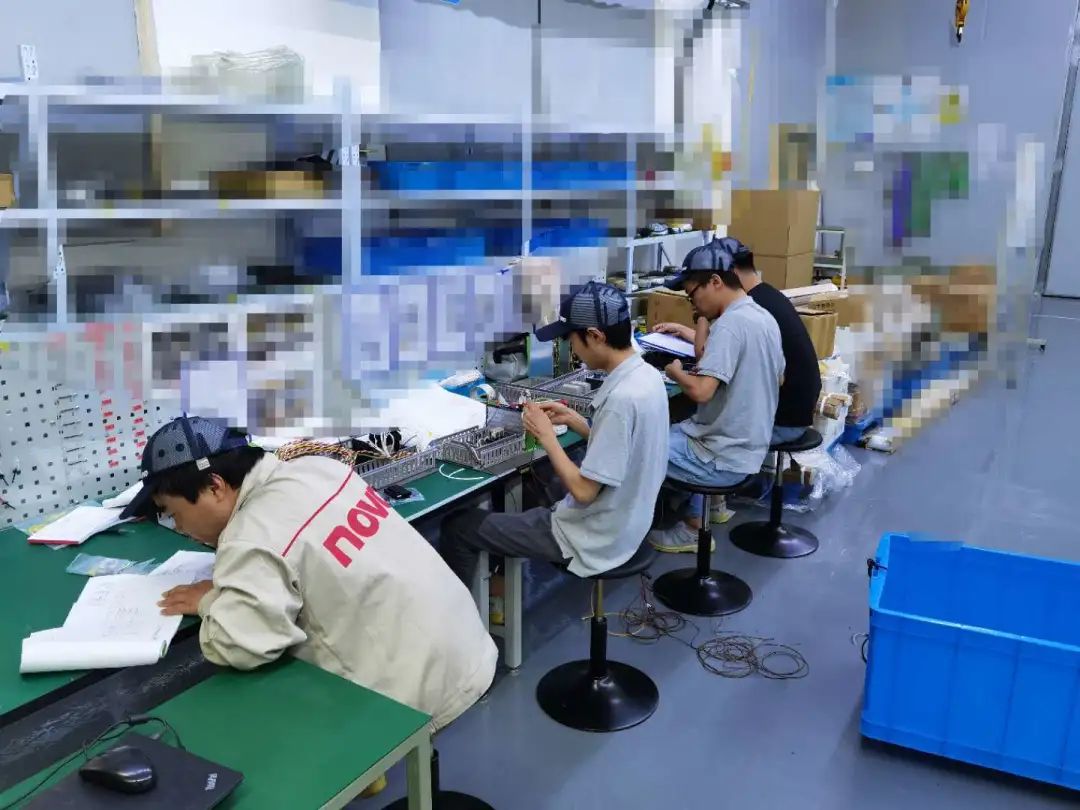
(1) Understand product characteristics (including appearance, size, tolerance, structure, process, etc.).
(2) Wipe the parts (including standard parts and non-standard parts) clean, pick out the most core parts, and start assembly and debugging from the most core parts. During assembly, check and measure the precision of the assembled parts to ensure horizontal, vertical and concentricity.
(3) For the single cylinder push-pull or lifting part, the pull should be in place and the push should be in place, and there should be no abnormal resistance.
(4) The balance, perpendicularity and concentricity of the rotating part shall be ensured. In order to achieve the swing arm, the precision of indexing.
(5) The pin, pin groove with pin hole and card groove should be wiped clean, select the appropriate pin (pin material hardness is above 58 degrees), positioning, the pin with the best single side fitting, easy to disassemble and assembly; the accuracy of the card slot should be controlled within 0.02 to ensure the accuracy in the secondary assembly. Internal polishing should be done to prevent scratches and scratches.
(6) Feeding part of the feeding path is mostly based on the product, and the tolerance zone is about 0.1.Can ensure the product in the material path passes unimpeded. The feeding direction and connection of the material passage parts shall be back beveled to the standard of 0.2*30 degrees. The specific situation shall be determined according to the product.
(7) Special attention should be paid to nut and slide rail during assembly of screw and slide rail. Do not slide out screw and slide rail, and avoid the products being scrapped or the accuracy being affected by the ball falling out. After ensuring the parallelism, perpendicularity and concentricity of the parts during assembly, assembly shall be carried out. In order to prevent unqualified parts in the assembly of the screw rod and slide rail deformation caused by scrap.
(8) Speed of the valve the speed of the valve should be in the best state of just the speed of the product to be shipped without affecting the production efficiency. If the valve is too fast, it will vibrate or shake the product away. Too slow will reduce the efficiency of production. (Note that we usually use an exhaust throttle)
A. Magnetic switch (often called sensor), and cylinder induction is divided into front sense and back sense. The forward induction should be pushed to the front end of the cylinder, and the stroke of the cylinder should also be at the front end. At this time, the sensor should be in the state of off lights. It is appropriate to push the sensor back from the front end to just light. Same as above.
B. Optical fibers are adjusted according to different brand specifications. The operation is different but the principle is the same.
(10) Vibration plate, direct vibration plate and direct vibration are divided into two parts: vibration part and control part. The vibration part is mainly vibration magnet, and the control part is vibration controller, which has power switch button, voltage button and frequency button. If the vibration frequency is too high, the product will vibrate or go back. The vibration is too small, the product moves or does not move.