LCD LED OLED QLED? An article read understand!
2021.08.13
We often see LCD,LED,OLED,QLED, although only one letter difference, but the difference is very big! Today, I will explain it in detail.
LCD
LCD is the full name of Liquid Crystal Display, mainly TFT, UFB, TFD, STN and other types of Liquid Crystal Display.
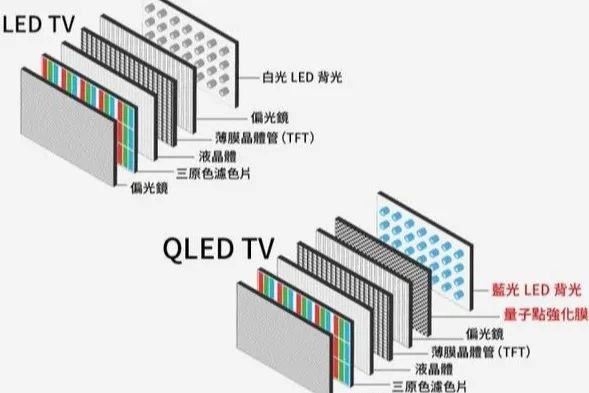
The structure of the LCD is placed in the middle of the two pieces of parallel glass liquid crystal box, the substrate glass set on TFT (thin film transistor), set the color filter substrate glass on, on the TFT signal and the voltage change to control the rotation direction of the liquid crystal molecules, so as to achieve control of each pixel display emergent polarized light or not and to achieve.
LCD is a kind of material between solid and liquid. It does not emit light on its own, but requires the help of an extra light source. Therefore, the number of lamps is related to the LCD brightness.
LED
LED (Light-Emitting diode) light-emitting diode screen, in fact, the image of these displays is still produced by liquid crystal, Light emitting diode only as a Light source, in technology is still LCD display, or CALLED LED backlight LCD display TV.
LED screen liquid crystal display (LCD) TV, the advantages of small size, low power consumption, long life, low cost, high brightness, far visual Angle and high refresh rate characteristics, the disadvantage is that the color performance is poor, especially in the LCD screen folding place color deviation is more obvious.
OLED
OLED (Organic Light-Emitting Diode), which is just one letter apart from LED, actually describes completely different things.
OLED, on the other hand, emits light on its own, so it doesn't need a backlight. LED is made of metal material, while OLED is made of organic material. It can emit light independently without lighting, and has a better contrast. Normally used LED can only see things with backlight.
Materials are used by the current leds are inorganic semiconductor materials, more difficult to apply in large area and a component with high resolution (EX: screen), to solve these problems depends on new organic semiconductor materials (i.e., containing hydrocarbon materials), coating it on conductive glass, in current, can emit different wavelengths of light.
QLED
QLED, short for Quantum Dot Light Emitting Diodes, is a self-emitting technology that does not require additional Light sources.
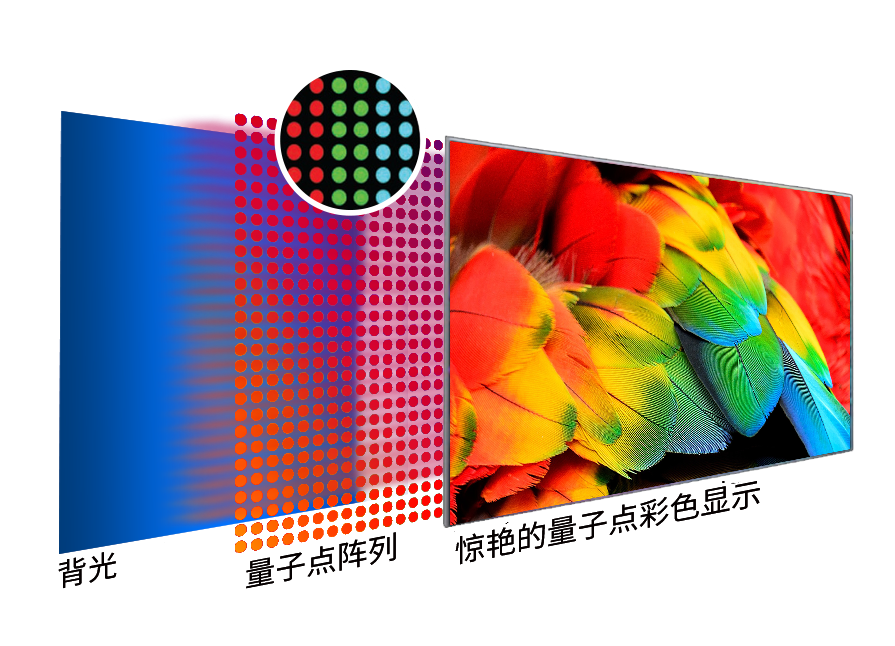
Quantum Dots are tiny semiconductor nanocrystals that are invisible to the naked eye. They are particles less than 10 nanometres in size. Quantum dots have a unique property: whenever they are stimulated by light or electricity, they emit colored light. The color of the light is determined by the quantum dot's composition, size and shape. The frequency of the light can be precisely adjusted by changing the size, shape and material of the quantum dot, thus allowing for a variety of applications.
The structure of QLED is very similar to OLED technology, with the main difference being that the center of QLED's luminescence is made of Quantum dots. The structure is that the electrons and holes on both sides of the quantum dot layer are aggregated to form a photon, which emits light through the recombination of photons.
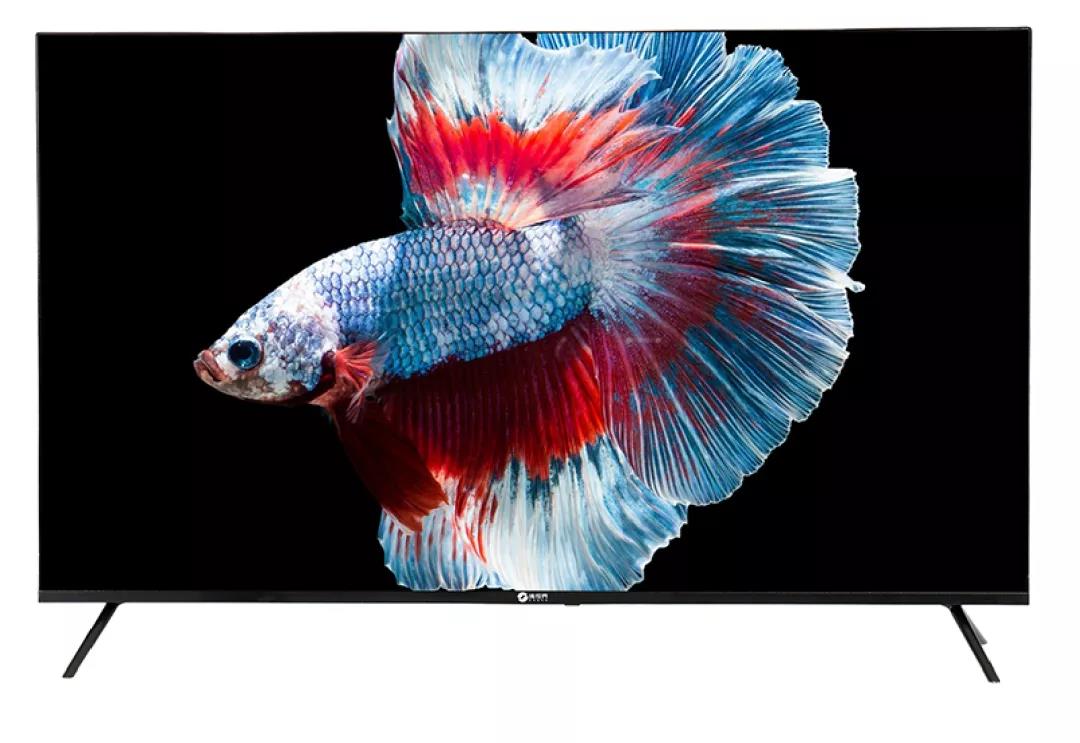
As we all know, LCD panels emit light through backlight, and produce various colors through the refraction of liquid crystal molecules. The liquid crystal molecules themselves cannot emit light, and LED only refers to the backlight.